How to Choose the Best Dental Clinic in Delhi
Choosing a dental clinic is an important decision because the right dental care involves more than simply finding a clinic close to home. Patients may need routine examinations, preventive care, restorative treatment, root canal treatment, orthodontic care, treatment for gum problems, replacement of missing teeth, or other dental procedures.
Delhi has many dental clinics, so comparing a few important factors before making an appointment can help you make a more informed choice. The dentist’s qualification and area of expertise, professional registration, patient communication, clinic hygiene, treatment costs, available equipment, location, and follow-up arrangements are all useful factors to consider.
There is no single checklist that can identify one clinic as the “best” for every patient. Your dental needs and the type of treatment you require should influence your choice.
The following guide explains what to look for when choosing a dental clinic in Delhi.
Check Dentist’s Specialisation
Match the Dentist’s Expertise to Your Dental Problem
The first step is to identify what type of dental care you need. General dental care and specialized dental treatment are not always provided by the same type of dental professional.
For example, a patient seeking routine dental care may begin with a general dentist, while particular conditions may require additional expertise in areas such as orthodontics, periodontology, endodontics, prosthodontics, pediatric dentistry, or oral and maxillofacial surgery.
The National Dental Commission’s official college information lists postgraduate dental specialties including Conservative Dentistry and Endodontics, Orthodontics and Dentofacial Orthopedics, Pediatric and Preventive Dentistry, Periodontology, Prosthodontics and Crown & Bridge, and Oral and Maxillofacial Surgery.
When choosing a clinic, therefore, ask whether the dentist’s training and experience are appropriate for the dental problem you want treated.
Understand Common Dental Specialities
Understanding common dental specialties can make it easier to decide what type of professional you may need.
Endodontics is associated with treatment involving the dental pulp and root canal treatment. Orthodontics and Dentofacial Orthopedics deals with the correction of tooth and jaw relationships. Periodontology focuses on the supporting tissues of the teeth, while Prosthodontics and Crown & Bridge includes areas of tooth restoration and replacement.
Pediatric and Preventive Dentistry focuses on dental care for children, while Oral and Maxillofacial Surgery includes surgical management of conditions involving the mouth, jaws, and related structures.
These specialties are formally represented in the National Dental Commission’s postgraduate dental education listings.
You do not necessarily need to select a specialist yourself. A dentist can assess your condition and determine whether specialist treatment or referral is appropriate.
Verify the Dentist’s Professional Credentials
Before beginning major dental treatment, check the dentist’s professional qualifications and registration information.
The National Dental Commission currently provides an Indian Dentists Register and a College Search facility on its official website. The Commission’s website states that the Dental Council of India was dissolved with effect from 19 March 2026 and that the National Dental Commission came into effect on the same date.
This gives patients an official source through which they can check available professional and educational information.
A clinic should also be able to provide understandable information about the dentist responsible for your care.
Check the Dentist’s Dental Qualification and College
BDS and Recognised Dental Education
A dentist’s educational qualification is an important factor when choosing a dental professional.
In India, BDS is the undergraduate dental qualification, while MDS represents postgraduate education in a dental specialty. The National Dental Commission’s official database provides information about BDS and MDS dental education and approved institutions.
When reviewing a dentist’s profile, look for clearly stated educational qualifications and, where applicable, postgraduate specialty training.
Do not judge a dentist only by the number of qualifications listed on a website. The qualification should be considered together with registration, relevant experience, the treatment required, and the dentist’s ability to explain your care clearly.
Government vs Private Dental Colleges
Patients sometimes assume that studying at a government dental college automatically means that a dentist will provide better treatment than someone who studied at a private dental college.
There is no reliable basis for making that conclusion solely from the type of college.
The National Dental Commission’s official college database includes both government and private dental institutions and records their approved dental courses and specialties.
Therefore, instead of choosing a dentist simply because the college was government or private, consider whether the dentist has a recognized qualification, appropriate registration, relevant training, and experience related to your dental needs.
How to Verify Dentist Registration
If you want to verify a dentist’s professional registration, the National Dental Commission provides an Indian Dentists Register through its official portal.
You can use the available registration information to check the dentist’s professional record where the information is available through the register.
This is a more useful approach than relying only on promotional descriptions, social media profiles, or online advertisements.
Look for Patient Reviews and Testimonials
Read Reviews for Consistent Patterns
Patient reviews can give you information about individual experiences with a dental clinic.
When reading reviews, look for recurring observations about areas such as communication, appointment management, staff interaction, clinic environment, and the overall patient experience.
Do not base your decision on one review. A pattern across multiple detailed reviews can provide more useful context.
The Indian Dental Association’s patient-management standards also recognize the importance of patient feedback and state that dental clinics should provide patients with opportunities to express their views and concerns.
Don’t Depend Only on Star Ratings
A numerical rating does not explain everything about a dental clinic.
A clinic may have patients with different treatment requirements, and individual experiences can vary. Reading detailed reviews can help you understand what patients are actually commenting on rather than relying only on a star rating.
You can look for comments about:
- How clearly the dentist explained treatment
- How the clinic handled appointments
- How staff communicated with patients
- Whether patients received information about their treatment
- How concerns were addressed
- General impressions of the clinic environment
Reviews should be treated as one source of information rather than proof of clinical quality.
Visit the Clinic to Assess Staff Behaviour and Hygiene
If possible, visiting the clinic before committing to extensive treatment can help you evaluate practical aspects of the patient experience.
Observe whether the clinic environment appears clean and maintained and whether staff communicate respectfully.
The Indian Dental Association’s standards state that the dental clinic environment should support safe and effective care, patient comfort, and privacy. They also specify that clinic premises should be clean and that infection-control procedures should be followed.
The way a clinic communicates with you can also be important. IDA patient-management standards state that patients should be treated with dignity and respect and should receive explanations about their care in terms they can understand.
Compare Treatment Cost and Technology
Ask for a Clear Treatment Estimate
Dental treatment costs can differ according to the treatment required, investigations, materials, laboratory work, and other factors.
Before starting extensive treatment, ask the clinic to explain the expected cost and what the estimate includes.
The Indian Dental Association’s clinic standards specifically identify treatment-cost information, including information relating to initial consultation, treatment, investigations, and prescriptions, as information that should be available to patients.
A clear discussion about cost can reduce confusion later.
Understand What Is Included in the Cost
When comparing two dental clinics, do not compare only the headline price.
Ask whether the quoted amount includes the consultation, diagnostic investigations, treatment, materials, laboratory charges, and planned follow-up where applicable.
Different treatment plans may contain different components, so two prices may not represent exactly the same service.
If additional procedures could become necessary, ask the dentist to explain under what circumstances those additional costs might arise.
Consider Whether Technology Is Appropriate for Your Treatment
Dental technology can support diagnosis, treatment planning, and delivery of care, but the presence of expensive equipment alone does not establish that a clinic is better.
Ask what technology is being recommended and why it is relevant to your particular dental problem.
For example, dental radiographs should be taken when clinically appropriate, and the IDA’s patient-management standards state that dental teams should follow radiation guidance and legislation and ensure that radiographs are taken safely and appropriately.
The important question is not simply whether a clinic advertises “advanced technology,” but whether the equipment and procedures are appropriate for your dental needs.
Check the Doctor’s Consultation at the Clinic
What Should Happen During the First Consultation
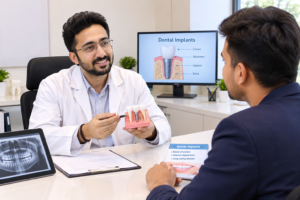
The first consultation is an opportunity to discuss your dental concern and understand what examination or assessment may be required.
The dentist should obtain relevant information about your dental and medical history and assess your needs before treatment.
The Indian Dental Association’s patient-management standards state that the dental team should check the patient’s medical history before treatment and that assessment of the patient’s needs should guide decisions about dental care.
A consultation should therefore be more than simply receiving a treatment price. It should help establish what your dental problem is and what care may be appropriate.
Ask About Diagnosis and Treatment Options
Do not hesitate to ask questions about your diagnosis.
Useful questions include:
- What dental problem do I have?
- What treatment is being recommended?
- Are there other treatment options?
- Why is this option suitable for me?
- How many appointments may be required?
- What follow-up will be necessary?
The Indian Dental Association’s standards state that patients should receive explanations about their care and treatment in terms they can understand and should have an opportunity to ask questions during the appointment.
Clear communication can help you understand the reasoning behind a proposed treatment.
Discuss Risks, Benefits and Follow-Up
Before agreeing to a procedure, ask the dentist to explain what the treatment involves and what follow-up may be required.
The IDA’s patient-management standards state that examinations, investigations, or treatment should be carried out after the patient has been advised about what will happen and has given agreement. The same standards emphasize discussing concerns about treatment, including pain control or anxiety.
Ask what you should expect after treatment and whom you should contact if you have a concern.
Check the Sterilization of the Instruments
Why Dental Instrument Sterilization Matters
Dental instruments may come into contact with blood, saliva, mucous membranes, or tissues during treatment. Reusable instruments therefore need appropriate cleaning and reprocessing before they are used again.
The CDC states that critical dental instruments that penetrate soft tissue or bone should always be heat sterilized. It also recommends heat sterilization for most heat-tolerant semicritical dental instruments that contact mucous membranes.
This makes infection-control procedures an important factor when comparing dental clinics.
Ask About Instrument Cleaning and Sterilization
Patients can reasonably ask a dental clinic how reusable instruments are cleaned, packaged, sterilized, and stored.
CDC guidance describes cleaning as an essential step before sterilization or high-level disinfection because organic material can interfere with the effectiveness of these processes.
The Indian Dental Association also states that dental clinics should have infection-control policies and procedures and should follow appropriate practices for decontamination of reusable dental and medical instruments.
A clinic should be able to explain its infection-control procedures clearly.
Check Disposable Items and Clinical Surface Hygiene
Not every item used during dental treatment is handled in the same way. Some devices or supplies are intended for single use, while reusable instruments require appropriate cleaning and reprocessing.
The CDC provides specific guidance on reusable and single-use dental devices as part of dental infection-control practice.
You can also observe whether clinical surfaces and treatment areas appear clean and maintained. The IDA’s dental-clinic standards specifically state that clinic premises should be clean and that comprehensive infection-control policies should be followed.
Check the Location and Accessibility
Choose a Convenient Clinic Location
Location is a practical factor that should not be overlooked.
Some dental treatments require multiple appointments, so a clinic that is reasonably convenient for you may make it easier to attend scheduled visits.
The uploaded dental guide also identifies location and office hours as practical factors when selecting a dentist.
Consider Accessibility for Multiple Appointments
If your treatment involves several appointments, consider how easily you can travel to the clinic.
Think about:
- Distance from your home or workplace
- Available public transportation
- Parking, where relevant
- Clinic opening hours
- Ease of attending follow-up appointments
Convenience should not replace clinical considerations, but it can be an important part of maintaining continuity of care.
The IDA standards state that appointment arrangements should take the patient’s needs into account and that patients should receive adequate information before an appointment.
Check Contact and Appointment Information
Before visiting a dental clinic, confirm the clinic’s address, appointment procedure, opening hours, and contact information.
The IDA’s clinic standards specifically identify services, opening hours, location, contact numbers, and treatment-cost information as information that should be provided to patients.
Clear contact information is also useful if you need to change an appointment or contact the clinic after treatment.
Ask About Follow-Up and Aftercare
Understand Your Follow-Up Schedule
Ask whether your treatment requires follow-up appointments and when you should return.
The appropriate follow-up schedule depends on the treatment and the individual patient’s oral health needs.
The IDA’s ongoing-care standards state that patients should be informed about their ongoing care and the next treatment required, with follow-up and routine check-ups based on their oral healthcare needs.
Know Whom to Contact After Treatment
Before leaving the clinic, make sure you know how to contact the dental team if you have a concern after treatment.
Ask for the appropriate clinic contact number and clarify when you should contact the dentist.
The IDA’s patient-management standards include requirements relating to patient contact information, complaints, concerns, and continuing care.
Ask About Managing Problems or Concerns
If you experience a problem after a dental procedure, you should know what the clinic recommends you do.
Ask about:
- When you should contact the clinic
- Which symptoms require prompt attention
- Whether a follow-up examination is required
- How aftercare instructions will be provided
The IDA standards state that patients should receive clear information about ongoing care and that clinics should have arrangements for handling patient concerns and complaints.
Consultation + CTA
Book a Dental Consultation
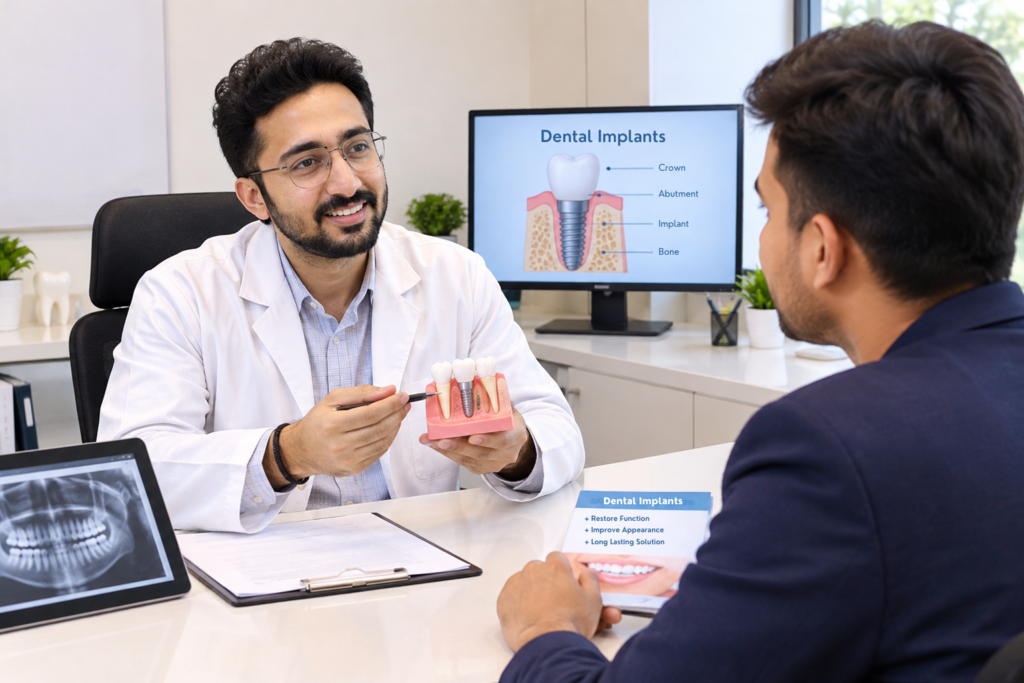
If you are experiencing a dental problem or want to understand your oral health needs, a dental consultation is a practical first step.
During a consultation, the dentist can assess your dental concern, review relevant medical and dental history, and explain appropriate treatment options based on the assessment.
If you would like to enquire about a consultation with Dr. Suresh Bharti, you can visit the clinic website for available information.
Discuss Your Dental Concerns
Before your appointment, make a note of the main problem you want to discuss.
You may want to mention:
- Tooth pain or sensitivity
- Bleeding gums
- A broken or damaged tooth
- Missing teeth
- Concerns about tooth alignment
- A dental problem that has returned after previous treatment
- Any questions about a recommended procedure
Also tell the dentist about relevant medical conditions, medications, and previous dental treatment because medical history can be relevant to safe dental care. The IDA patient-management standards specifically state that the dental team should check medical history before treatment.
Contact Dr. Suresh Bharti
If you are looking for a dental consultation in Delhi, you can contact Dr. Suresh Bharti to discuss your dental concern and appointment requirements.
Phone: +91 6388618522
Website: drsureshbharti.com
The clinic’s website provides information about Dr. Suresh Bharti’s dental practice and qualifications.
Final Thoughts
Choosing a dental clinic should involve more than comparing prices or selecting the clinic with the highest online rating.
Start by checking the dentist’s qualification, registration, and area of expertise. Then consider patient reviews, clinic hygiene, treatment-cost information, consultation quality, appropriate technology, accessibility, and arrangements for follow-up care.
For infection control, patients can ask how reusable dental instruments are cleaned and sterilized and whether appropriate infection-control procedures are followed. CDC guidance and Indian Dental Association standards provide useful benchmarks for understanding these issues.
Most importantly, choose a dental professional who explains your dental condition clearly, gives you an opportunity to ask questions, and discusses the proposed treatment and ongoing care in understandable terms. The Indian Dental Association’s patient-management standards specifically emphasize patient assessment, communication, consent, ongoing care, and opportunities for patient feedback.
Taking a little time to verify these factors before starting treatment can help you make a more informed decision about your dental care in Delhi.

About The Author