What is pulpectomy in primary teeth
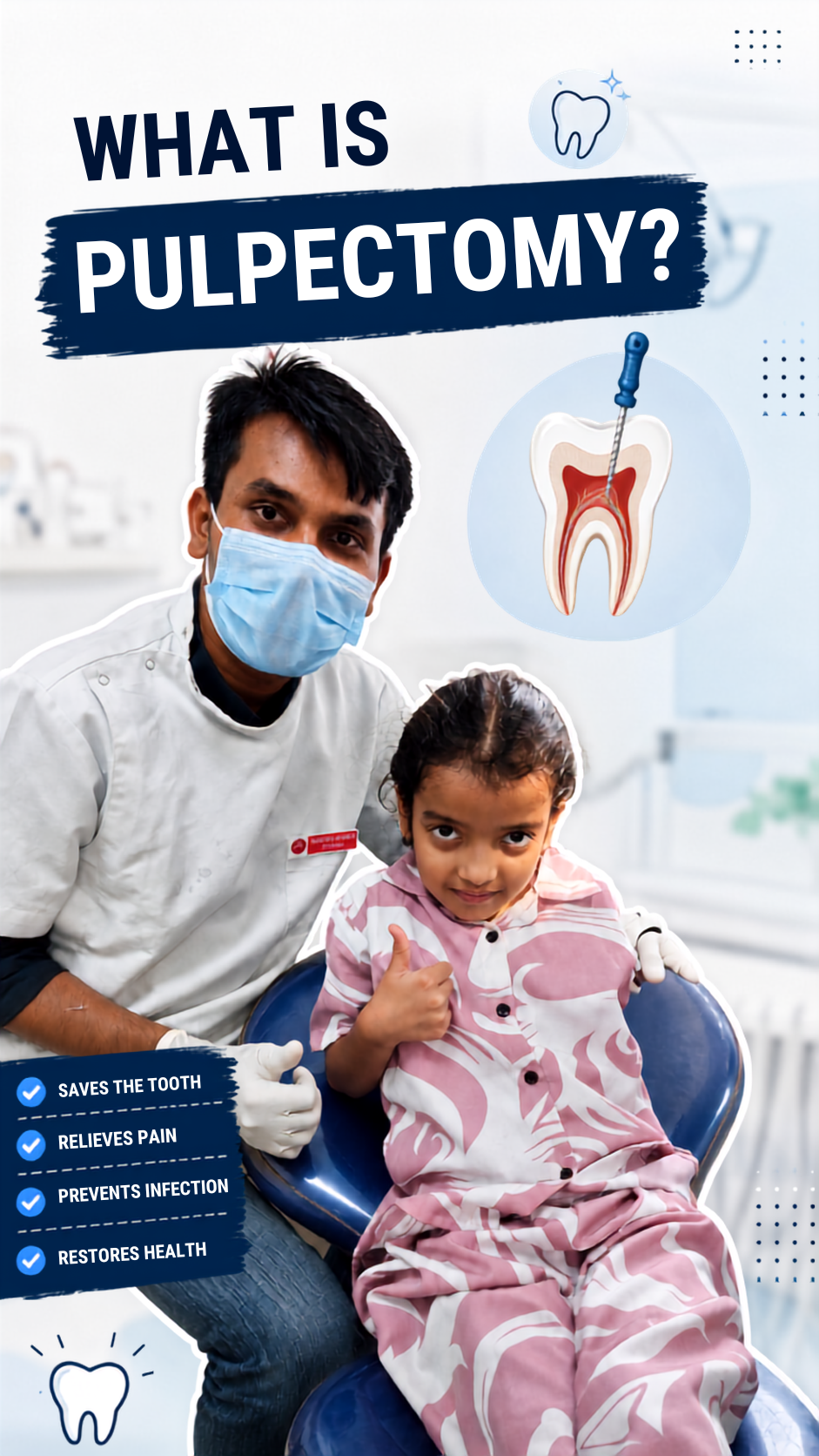
Definition of Pulpectomy
Pulpectomy is a root canal procedure performed in a primary tooth with irreversible pulpitis or a necrotic pulp, in which the pulp tissue is removed, the root canals are cleaned and shaped, disinfected, and subsequently filled with a resorbable material.
In simple terms, pulpectomy is similar to root canal treatment in a permanent tooth, but the technique and filling material are modified because the roots of primary teeth undergo physiological resorption as the permanent successor develops.
Causes
The major causes of pulpal disease in primary teeth include:
1. Dental Caries
Dental caries is the most common cause of pulpal involvement in primary teeth. When untreated caries progresses through enamel and dentin and reaches the pulp, bacteria and their products can cause inflammation. Advanced caries may eventually result in irreversible pulpitis or pulp necrosis.
2. Dental Trauma
Trauma to primary teeth, particularly anterior teeth, can damage the pulp. Depending on the severity of the injury, pulpal inflammation or necrosis may develop. Trauma is therefore another important indication for non-vital pulp treatment.
3. Irreversible Pulpitis
When inflammation of the pulp is severe and the pulp cannot recover, the condition is termed irreversible pulpitis. In a restorable primary tooth, pulpectomy may be considered when the radicular pulp is irreversibly inflamed.
4. Pulp Necrosis
If the blood supply to the pulp is lost and the pulp tissue becomes non-vital, necrosis occurs. Clinical or radiographic findings may include swelling, sinus tract, abnormal mobility, or furcation/periapical radiolucency.
5. Pulpal Involvement During Extensive Caries
A primary tooth with extensive caries may initially be considered for pulpotomy. However, if examination indicates that the radicular pulp is irreversibly inflamed or necrotic, pulpectomy rather than pulpotomy is indicated.
Indications of Pulpectomy
Pulpectomy may be indicated when:
- The primary tooth has irreversible pulpitis.
- The pulp is necrotic.
- There is infection associated with the pulp.
- The tooth is restorable and useful for maintaining function and space.
- The roots have minimal or no pathological resorption.
- The tooth is expected to remain functional for a meaningful period before normal exfoliation.
Contraindications
Pulpectomy is generally not appropriate when:
- The tooth is non-restorable.
- There is extensive destruction of the crown or roots.
- There is significant pathological root resorption.
- The tooth is close to normal exfoliation.
- Adequate isolation or restoration of the tooth cannot be achieved.
- The infection cannot be adequately controlled.
Treatment Procedure
The exact clinical protocol should be performed by a trained dental professional. The major stages are:
1. Diagnosis
A proper diagnosis is made using the child’s history, clinical examination, and appropriate radiographic examination. The dentist assesses symptoms, restorability, root condition, and the relationship of the primary tooth to its permanent successor.
2. Local Anesthesia and Isolation
Local anesthesia is administered when indicated, and the tooth is isolated to maintain a clean operating field and prevent contamination.
3. Access Opening
An appropriate access cavity is prepared to expose the pulp chamber and provide access to the root canals.
4. Removal of Pulp Tissue
The infected or necrotic pulp tissue is removed from the pulp chamber and root canals. Primary tooth root canals can have complex anatomy, so careful instrumentation is required.
5. Cleaning and Shaping
The canals are cleaned and shaped using suitable hand or rotary instruments. Both manual and rotary instrumentation can be used; evidence reviewed by the AAPD indicates that rotary instrumentation is generally faster, while overall quality and success can be comparable.
6. Irrigation and Disinfection
Irrigation helps remove debris and reduce microorganisms from the root canal system. AAPD guidance identifies irrigants such as appropriately used sodium hypochlorite or chlorhexidine as options for canal disinfection. Sodium hypochlorite must be used carefully because extrusion beyond the apex can cause tissue injury.
7. Drying of Canals
After cleaning and irrigation, the canals are appropriately dried before obturation.
8. Obturation
The cleaned canals are filled with a resorbable root canal filling material. This is a critical difference between primary and permanent teeth.
9. Final Restoration
The tooth should be restored adequately to provide a good coronal seal and prevent microleakage. For extensively damaged primary posterior teeth, an appropriate full-coverage restoration may be considered by the treating dentist.
Filling Materials Used in Primary Teeth
The root canal filling material for primary teeth should ideally be:
- Resorbable.
- Antibacterial or capable of supporting canal disinfection.
- Biocompatible.
- Easy to insert.
- Easy to remove if necessary.
- Able to resorb at a rate compatible with physiological root resorption.
- Harmless to the developing permanent successor.
Commonly discussed obturating materials include:
1. Zinc Oxide Eugenol (ZOE)
Zinc oxide eugenol has historically been one of the most widely used materials for pulpectomy in primary teeth. It provides a relatively stable canal filling but should be used with consideration of the resorption characteristics and developing successor.
2. Iodoform-Based Pastes
Iodoform-containing materials are also used in primary teeth. They are resorbable and have antimicrobial properties.
3. Calcium Hydroxide-Iodoform Pastes
Combinations containing calcium hydroxide and iodoform are widely used for primary tooth pulpectomy. Examples discussed in pediatric dentistry literature include formulations such as Vitapex/Metapex-type materials.
4. Zinc Oxide-Iodoform-Calcium Hydroxide Formulations
Combinations containing zinc oxide, iodoform, and calcium hydroxide are another important group of obturating materials.
Current AAPD evidence indicates that zinc oxide/iodoform/calcium hydroxide combinations and ZOE have shown favorable outcomes compared with iodoform-only materials in studies of primary tooth pulpectomy.
Why Is a Resorbable Filling Material Used?
Primary teeth naturally undergo root resorption before exfoliation. Therefore, the filling material should also be capable of resorbing appropriately.
A permanent-tooth material such as conventional gutta-percha is not routinely selected for primary-tooth pulpectomy because the treatment should accommodate the normal eruption and development of the permanent successor.
The ideal outcome is a properly filled primary tooth that remains functional until its normal exfoliation without interfering with the developing permanent tooth.
Conclusion
Pulpectomy is an important non-vital pulp therapy for restorable primary teeth affected by irreversible pulpitis or pulp necrosis. The procedure involves diagnosis, access preparation, removal of infected pulp tissue, canal cleaning and shaping, irrigation, disinfection, obturation with a resorbable material, and definitive restoration.
The major obturating materials used in primary teeth include zinc oxide eugenol, iodoform-based pastes, calcium hydroxide-iodoform preparations, and zinc oxide-iodoform-calcium hydroxide formulations. The choice should be based on the clinical situation, material properties, evidence, and the child’s developing dentition.
The main objective is not simply to eliminate infection, but to retain a healthy, functional primary tooth until its appropriate time of exfoliation while protecting the developing permanent successor.
References
- Marwah N. Textbook of Pediatric Dentistry.
- American Academy of Pediatric Dentistry. Pulp Therapy for Primary and Immature Permanent Teeth. The Reference Manual of Pediatric Dentistry. 2025–2026.
- American Academy of Pediatric Dentistry. Use of Non-Vital Pulp Therapies in Primary Teeth. Pediatric Dentistry. 2020;42(5):337–349.
About The Author