What is theTuberculosis (TB)
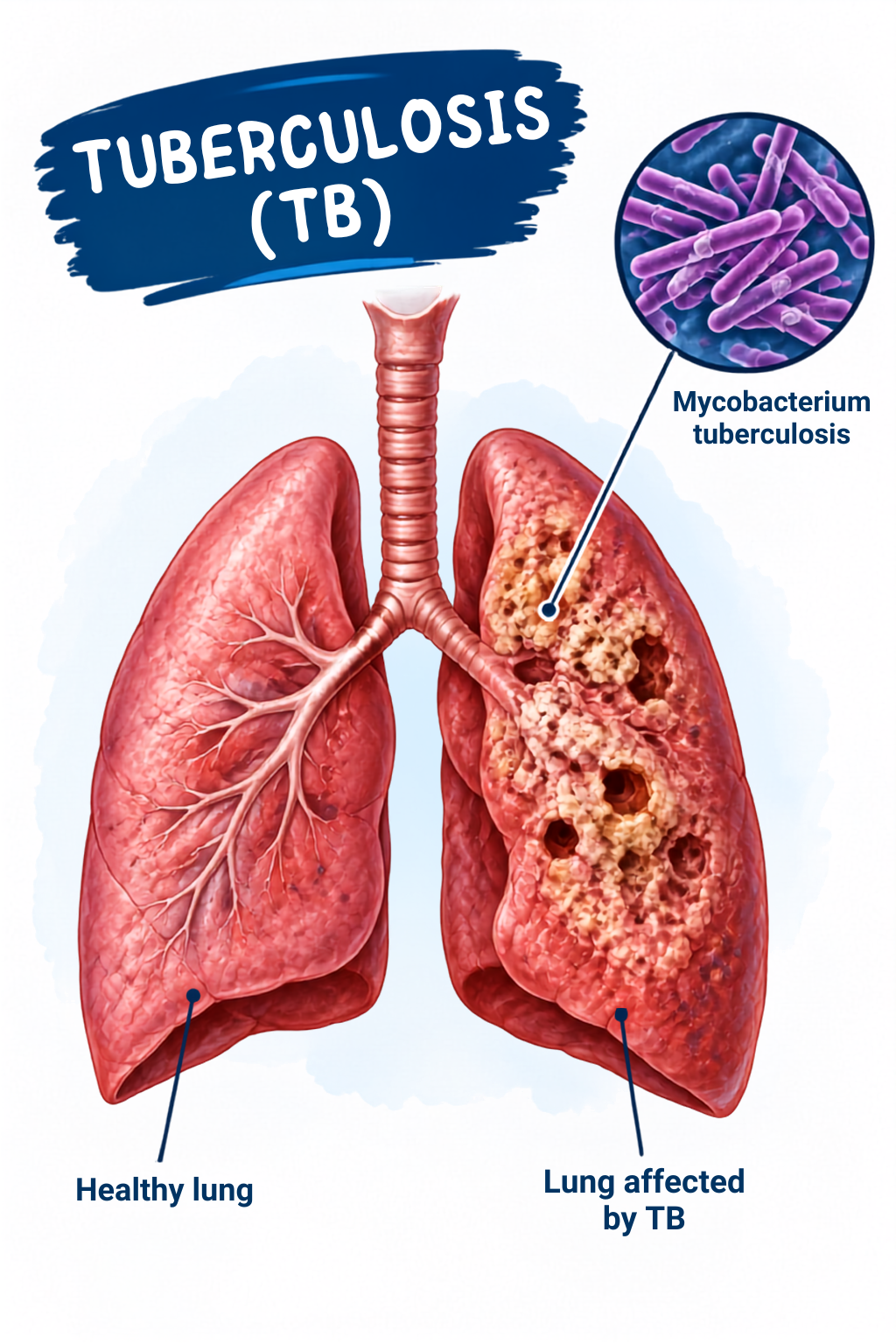
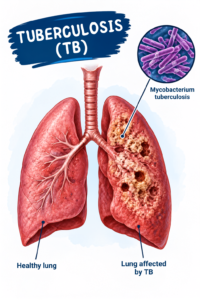
Tuberculosis (TB) is a specific infectious granulomatous disease caused by Mycobacterium tuberculosis. It remains a major health problem in most developing countries. It commonly affects lungs but also affects the intestines, meninges, bones, joints, lymph glands, skin, and other tissues of the body. The disease also affects animals like cattle and is known as bovine tuberculosis; and is sometimes communicated to man.
Symptom of tuberculosis
- Loss of appetite
- Fatigue or weakness
- Long lasting cough
- Weight loss
- Chill
- Fever
- Night sweat
Type of TB
Two types of TB
1.Pulmonary TB
2.Extrapulmonary TB
Etiology
M. tuberculosis is a facultative intracellular parasite. Human strains are responsible for many cases, but the bovine strain may also produce illness through the ingestion of unpasteurized cow’s milk. Rarely atypical or opportunistic mycobacteria can cause pulmonary or generalized infection in immunocompromised individuals.
M. tuberculosis is a rod-shaped, nonspore forming, and thin aerobic bacteria called acid-fast bacilli, due to the fact that once stained, it cannot be decolorized by acid alcohol. Its acid-fastness is due to the high content of mycolic acids, long chain cross-linked fatty acids and other cell wall lipids.
Males are more affected than females in India though it affects all ages, from an average of 1% in the under-five age group.
Diagnosis and test
How the diagnosis TB
If you have symptom like above mention ,your healthcare provider may get imaging,like a chest X-ray or CT scan.
The best way to diagnose active TB is for to collect a sputum sample (mucus coughed up from your lungs) and send it to a lab for testing.
diagnose latent TB with a blood or skin test.
Management OR Treatment
Both active and inactive TB with antibiotics.Most often, drugs used include
- Isoniazid
- Rifampin
- Pyrazinamide
- Ethambutol
Prevention
- BCG vaccine to prevent TB in children
- Coughing into your elbow or cover your mouth when you cough
- Wearing a mask around others if you have active TB
A Note from Dr Suresh Bharti
Tuberculosis (TB) affects millions of people worldwide. Although it can usually be treated successfully with antibiotics, the treatment process may take time and can sometimes be difficult. Remember, you don’t have to face it alone. Your healthcare team can guide you through treatment, connect you with helpful resources, and provide the support you need. Speaking with people who have experienced TB treatment can also provide comfort and encouragement.
About The Author