Causes of cavity in kids
Dental cavities, also called dental caries, are among the most common oral health problems in children. In pediatric dentistry, dental caries is understood as a multifactorial disease resulting from the interaction of the tooth, oral microorganisms, fermentable carbohydrates, and time. The risk is particularly important in primary teeth because their enamel and dentin are thinner and can be affected by caries relatively quickly.
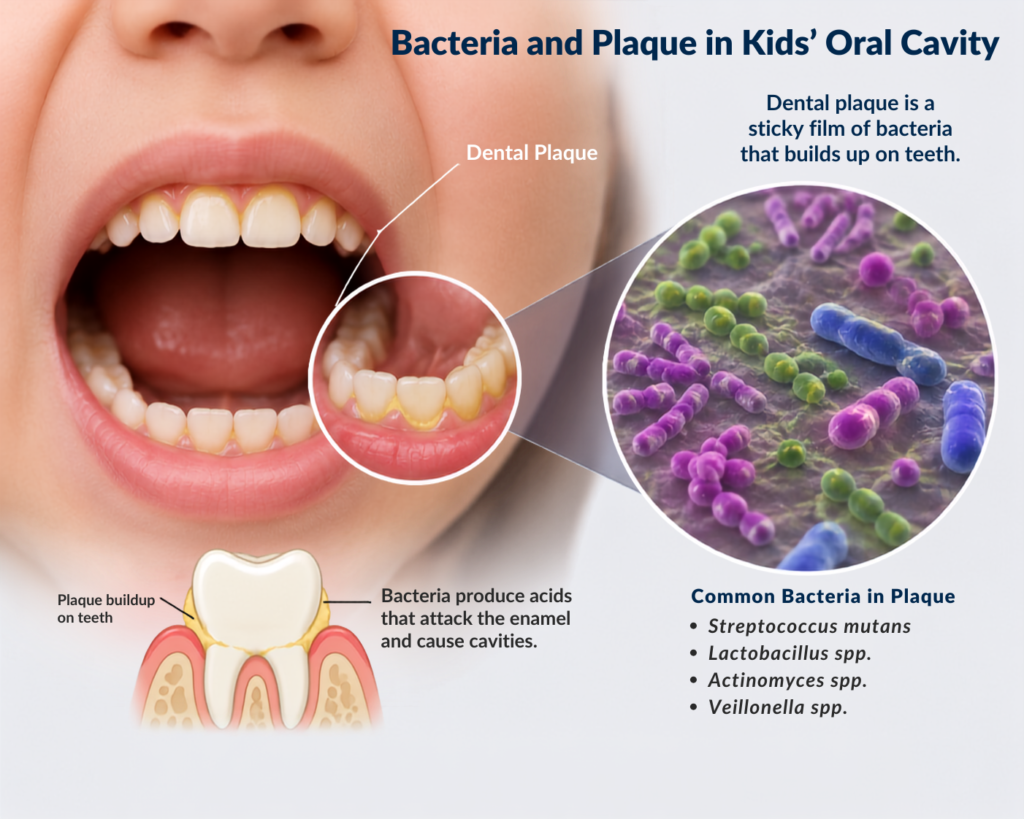
Bacteria and Dental Plaque
Frequent Consumption of Sugary Foods
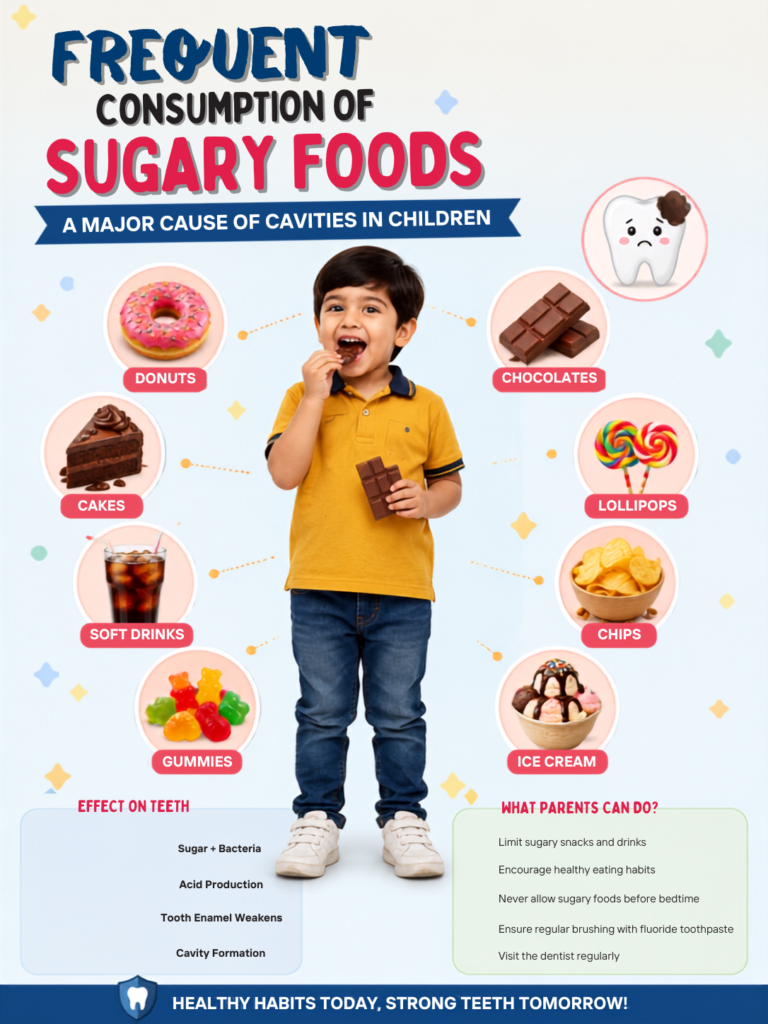
Frequent intake of sugars and other fermentable carbohydrates is an important dietary factor in childhood caries. Foods and drinks containing sucrose, glucose, and other fermentable carbohydrates can be metabolized by plaque bacteria.
The problem is not simply the amount of sugar consumed but also how frequently the teeth are exposed to it. Repeated snacking or sipping sweetened drinks throughout the day gives the tooth surface repeated acid attacks and reduces the opportunity for remineralization.
Sticky foods that remain attached to tooth surfaces for longer periods can also increase caries risk.
Night-Time Feeding and Early Childhood Caries
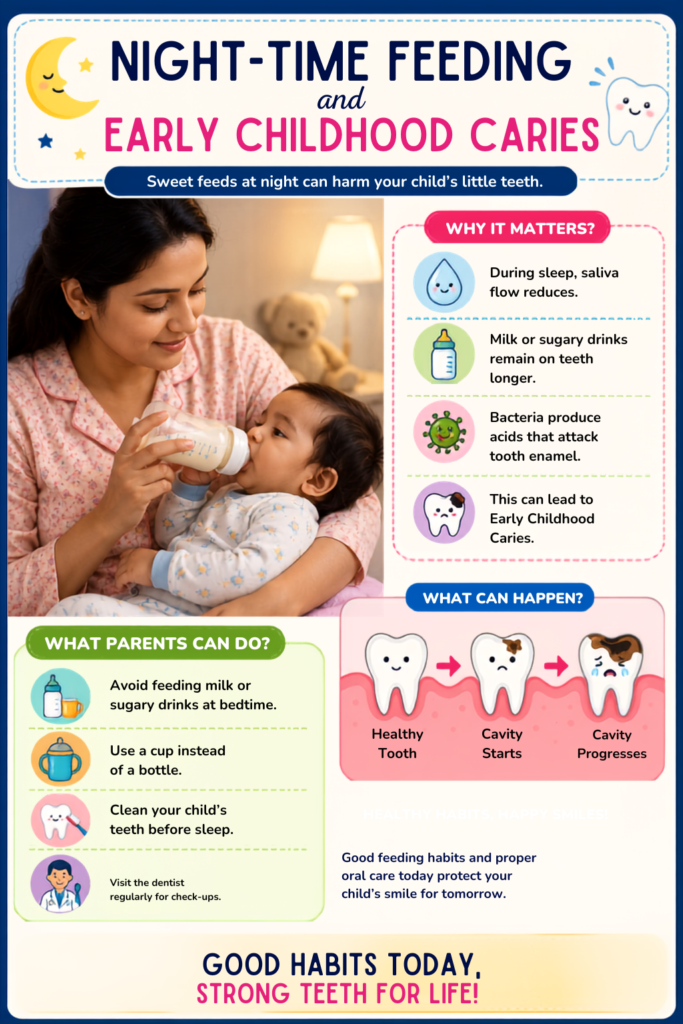
Frequent exposure to milk or other carbohydrate-containing drinks during sleep can contribute to early childhood caries, particularly when oral hygiene is inadequate.
During sleep, salivary flow decreases. This reduces the natural cleansing and buffering action of saliva, allowing acids produced by plaque bacteria to remain in contact with the teeth for longer.
Tooth Susceptibility
The characteristics of the tooth itself can influence caries development. Primary teeth have relatively thin enamel and dentin compared with permanent teeth, allowing caries to progress more rapidly once established.
Deep pits and fissures, irregular tooth morphology, enamel defects, and areas that are difficult to clean may provide favorable sites for plaque retention.
Poor Oral Hygiene
Inadequate brushing allows dental plaque to accumulate around teeth, particularly in areas that are difficult to clean. Plaque provides an environment where cariogenic bacteria can remain in contact with the tooth surface.
Children may also have difficulty maintaining effective brushing technique because of their age and developing motor skills. Therefore, parental supervision and assistance with toothbrushing are important during early childhood.
Reduced Salivary Protection
Saliva plays an important protective role against dental caries. It helps wash away food particles, neutralizes acids, provides minerals for remineralization, and contributes to maintaining the oral environment.
When salivary flow is reduced, the protective effects of saliva are diminished, potentially increasing the risk of dental caries.
Time
Dental caries does not usually develop from a single exposure to sugar or bacteria. It develops through repeated cycles of demineralization and remineralization over time.
When acid attacks occur frequently and the balance remains in favor of demineralization, the mineral content of the tooth is progressively lost, eventually producing a clinically detectable cavity.
How Can Cavities Be Prevented in Children?
Prevention focuses on controlling the major risk factors. Parents should encourage twice-daily toothbrushing with age-appropriate fluoride toothpaste, reduce frequent sugary snacks and drinks, encourage healthy eating habits, and arrange regular dental examinations.
For young children, parents should supervise brushing and avoid prolonged or frequent exposure to sweetened beverages, especially around bedtime.
Conclusion
Dental cavities in children are multifactorial and result from the interaction between susceptible tooth surfaces, cariogenic bacteria, fermentable carbohydrates, and time. Additional factors such as poor oral hygiene, frequent sugar exposure, reduced saliva, and feeding practices can increase the risk. Early prevention, fluoride use, good oral hygiene, dietary control, and regular dental visits can significantly reduce the burden of dental caries in children.
Reference:
Nikhil Marwah, Textbook of Pediatric Dentistry (Pedodontics).
About The Author