Teeth Whitening: What Works, What Doesn’t, and What’s Safe
A bright smile is one of the first things people notice about you, so it’s no surprise that teeth whitening is among the most popular cosmetic treatments in the world. But with so many products, home remedies, and social media trends, it’s hard to know what actually works and what could harm your teeth.
Why Teeth Change Color(black)
Teeth naturally darken over time, and several things speed it up:
- Food and drinks: Tea, coffee, red wine, cola, and berries all contain pigments that cling to enamel.
- Tobacco: Smoking and chewing tobacco leave stubborn yellow-brown stains.
- Ageing: Enamel wears thin over the years, letting the yellowish dentin underneath show through.
- Medications and injury: Some antibiotics, especially in childhood, and trauma to a tooth can cause discoloration from within.
- Poor oral hygiene: Plaque and tartar build-up dull the smile.
Professional Whitening
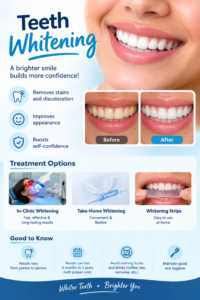
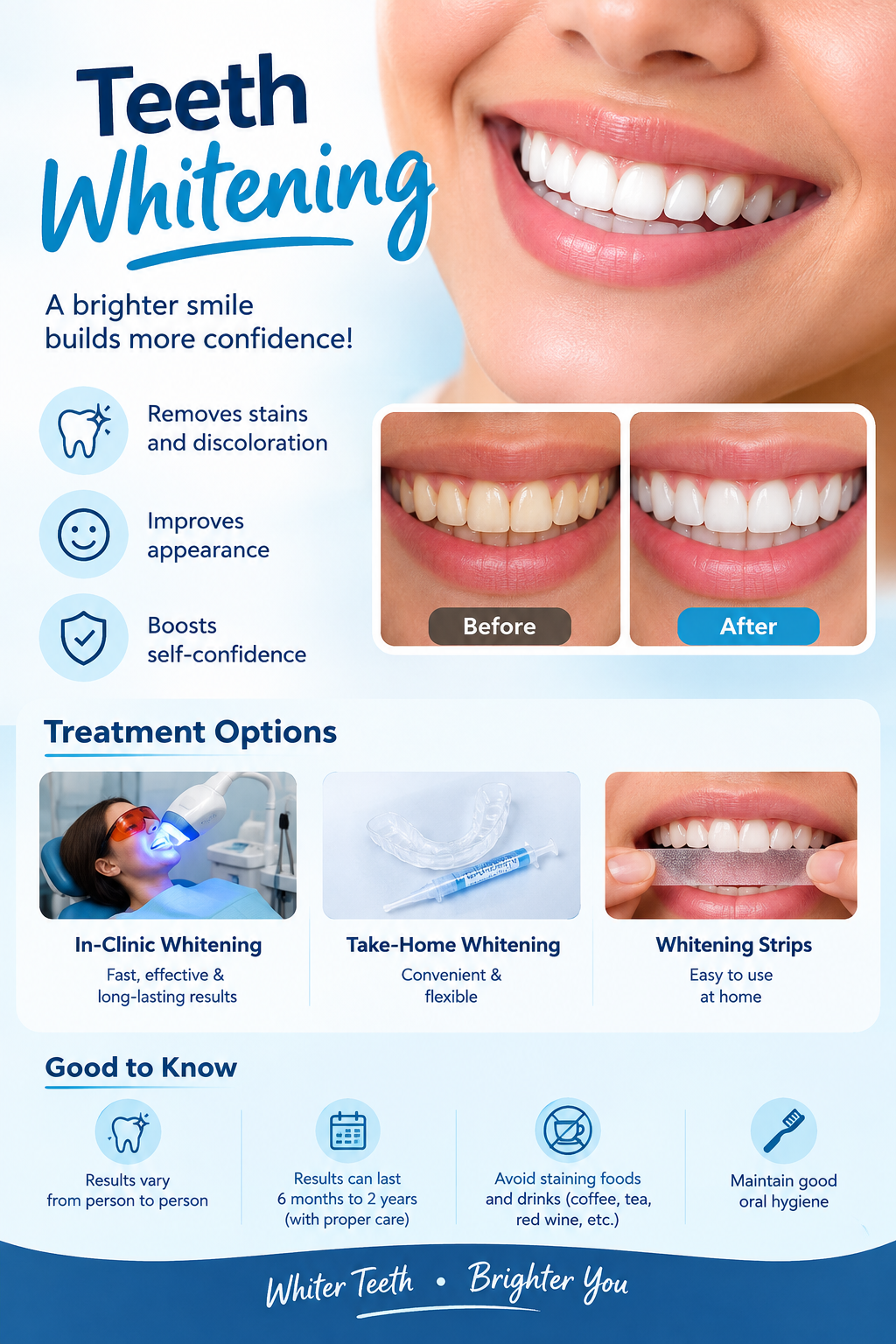
In-office whitening is the fastest and most predictable option. A dentist applies a high-concentration peroxide gel, often with a light or laser, and can lighten teeth several shades in about an hour. Gums are protected during the procedure, which lowers the risk of irritation.
Dentist-supervised take-home kits use custom-fitted trays with a lower-strength gel. Results take one to two weeks, but they are gentle, even, and long lasting.
Over-the-Counter Options
Whitening toothpastes, strips, and gels are affordable and convenient. Toothpastes mostly remove surface stains with mild abrasives, so their effect is modest. Strips containing peroxide can give visible results in a couple of weeks, but they may fit unevenly and cause patchy whitening. Always choose products that carry a recognized dental association seal and follow the instructions exactly.
Natural Remedies: Handle with Care
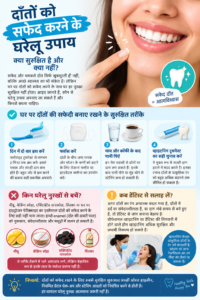
Baking soda, activated charcoal, lemon juice, and apple cider vinegar are popular online, but they come with caveats:
- Acidic remedies such as lemon juice and vinegar can erode enamel. Enamel doesn’t grow back.
- Charcoal is abrasive and has little proof of real whitening benefit.
- Baking soda is mildly abrasive and fine occasionally, but it won’t dramatically change your shade.
If a remedy feels harsh or is highly acidic, skip it. A short-term shade change isn’t worth permanent enamel damage.
Possible Side Effects
Whitening is generally safe when done correctly, but some people experience:
- Tooth sensitivity, usually temporary, to hot and cold foods
- Gum irritation from gel touching soft tissue
- Uneven results, especially on crowns, veneers, and fillings, which don’t whiten
Using a desensitizing toothpaste, taking breaks between treatments, and avoiding overuse all help. People with gum disease, cavities, or very sensitive teeth should have those problems treated first.
How to Keep Your Smile Bright
Whitening isn’t permanent, but good habits stretch the results:
- Brush twice a day with fluoride toothpaste and floss daily.
- Rinse with water after coffee, tea, or wine.
- Use a straw for dark or acidic drinks.
- Quit tobacco, which is better for your whole body, not just your smile.
- Get regular dental cleanings to remove stains and tartar.
- Do occasional touch-ups as your dentist advises.
The Bottom Line
The safest route to whiter teeth starts with a dental check-up. A dentist can identify the cause of your discoloration, rule out underlying problems, and recommend the right treatment for your teeth. Whether you choose in-office whitening, a custom kit, or simply better daily habits, remember that healthy teeth matter more than white ones. Be patient, avoid quick fixes that promise overnight miracles, and your smile can stay both bright and strong for years.
About The Author